
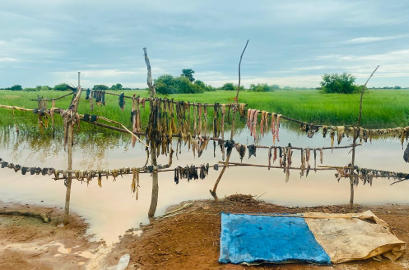
Over the past two years, The researcher from Ifakara Health Institute engaged with communities across Tanzania to better understand how climate change is affecting health, livelihoods, and daily life. Through discussions with community members, healthcare workers, policymakers, researchers, and local leaders, The researcher explored how climate-related challenges such as droughts, flooding, food insecurity, changing disease patterns, and extreme weather events are increasingly shaping public health realities across the country.
What became clear throughout this work is that Tanzania has already taken important steps at the policy and strategic level to address the National frameworks and climate-health commitments demonstrate strong political will and growing recognition of the need for climate adaptation and resilient health systems. However, communities continue to experience these impacts firsthand, often while navigating limited resources, strained health systems, and unequal access to support and preparedness mechanisms.
One message stood out consistently across all levels of engagement: resilience is not built through policy documents alone, t is built when national priorities connect meaningfully with local realities, when health systems are adequately prepared, and when communities themselves are included as active partners in designing and implementing solutions. Sustainable responses to climate-related health threats require coordination across sectors, stronger local investment, and approaches that recognize the lived experiences and knowledge of communities most affected.
The full article can be accessed here: Climate-related health threats in Tanzania: a multi-level analysis of key policies, strategies and community response. The paper reflects insights gathered across policy, institutional, and community levels, and highlights both the progress made and the critical gaps that still need collective action.