Evaluation Process Board Game
A board game developed by Chi Vo Thi Que (OUCRU-Vietnam) which presents the different steps involved in planning an evaluation.
Article written by Chi Vo Thi Que (OUCRU-Vietnam)
What is the game about?
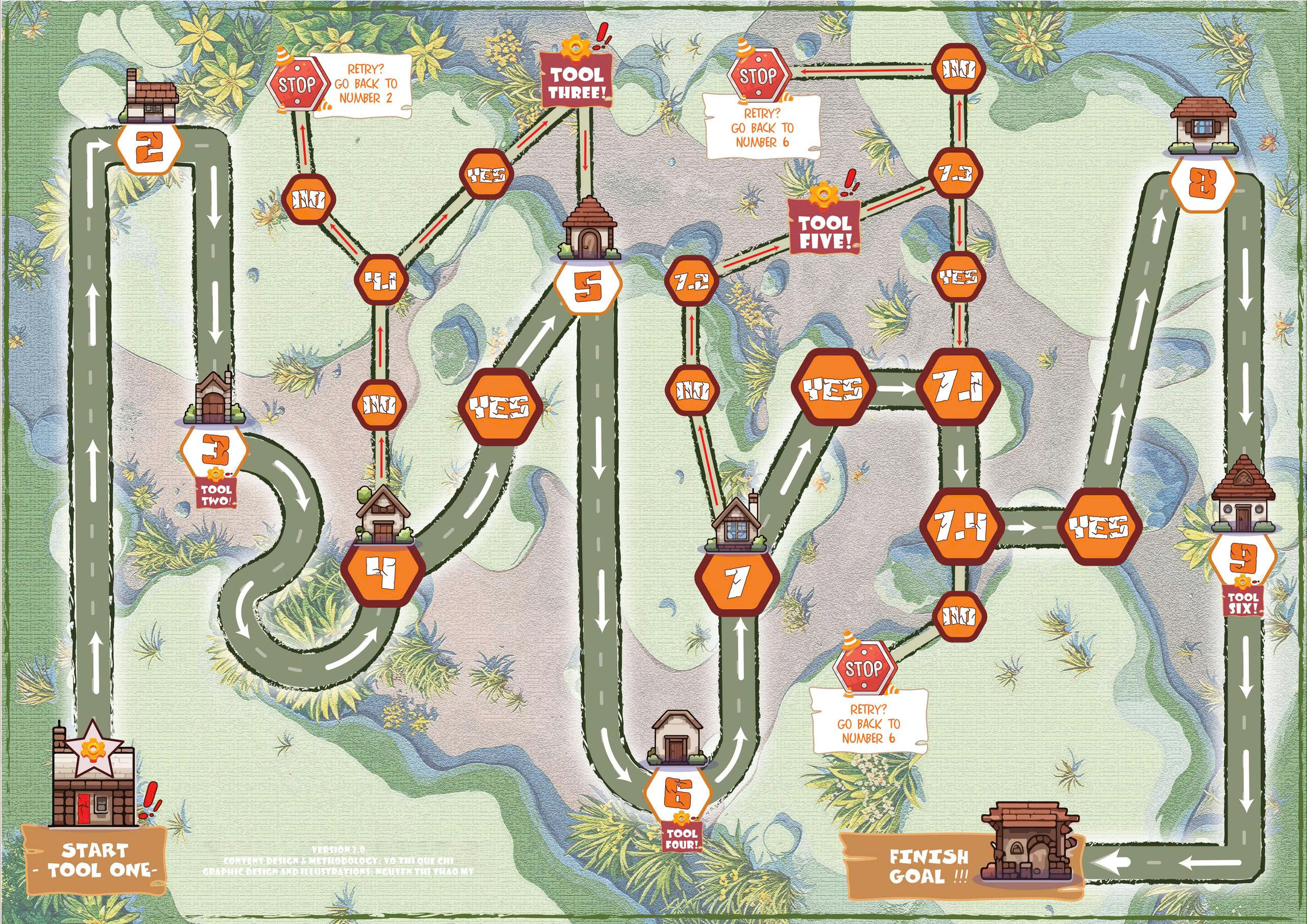
The game presents the different steps involved in planning an evaluation. It takes players on a road trip over different lands of evaluation: purpose, scope/focus, sense-checking, feasibility, and use. These steps are phrased in the form of questions so that players can discuss with their mates and agree on answers. By the end of the game, these answers will form a draft evaluation plan. Along the way, there are tools to help players complete the journey. The game stops when players finish the last question on the map.
Why a board game?
 A board game allows this planning process to be intuitive, participatory, and fun.
First, board games are tactile. Players must draw a card, move a token along the map, and write down answers. This helps to engage players and makes it intuitive for them to visualise the process.
Second, board games are always participatory (and so should any good evaluation!). We never play a board game alone; and we shouldn’t plan an evaluation by ourselves. Be it the project team, donors, local stakeholders, or community members; anyone can be invited into the game. This helps build a common understanding around evaluation and garners support from stakeholders.
Last, the element of “fun” in a game helps create a positive impression of evaluation for those with limited experience. Players ease into the “theory” in a fun, engaging way by playing different characters that might be different than who they are in real life all while trying to accomplish a mission. This makes the task of planning an evaluation seem less daunting.
How and why was it developed?
I was tasked with delivering a module on evaluation for a training on designing a Public and Community Engagement project in summer 2025. I didn’t want to be talking for 3 hours straight, and I always love leaving a workshop with something useful. Therefore, I wanted to create some kind of tool out of the content I needed to deliver. A flowchart
was my initial idea, but I would have ended up presenting the flowchart while the audience sat and listened. Instead, I developed a board game. I tested it with the Public and Community Engagement team (Oxford University Clinical Research Unit - Viet Nam). They gave me some really useful feedback which I applied to create the 2.0 version of the game. I then delivered this version for the training and received mixed feedback. While some absolutely loved it (and asked for copies of the game to take home), others still found it confusing and didn’t have as much fun.
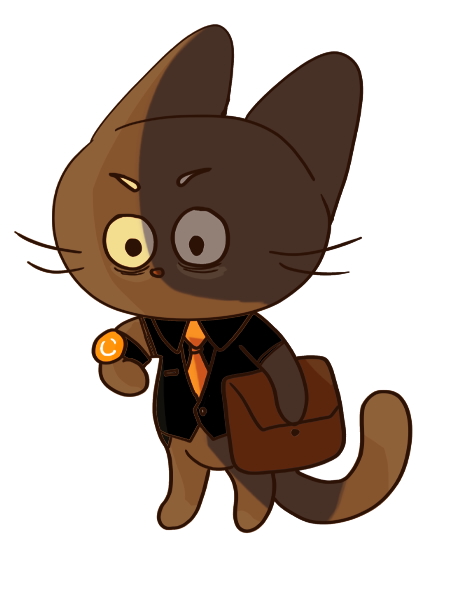
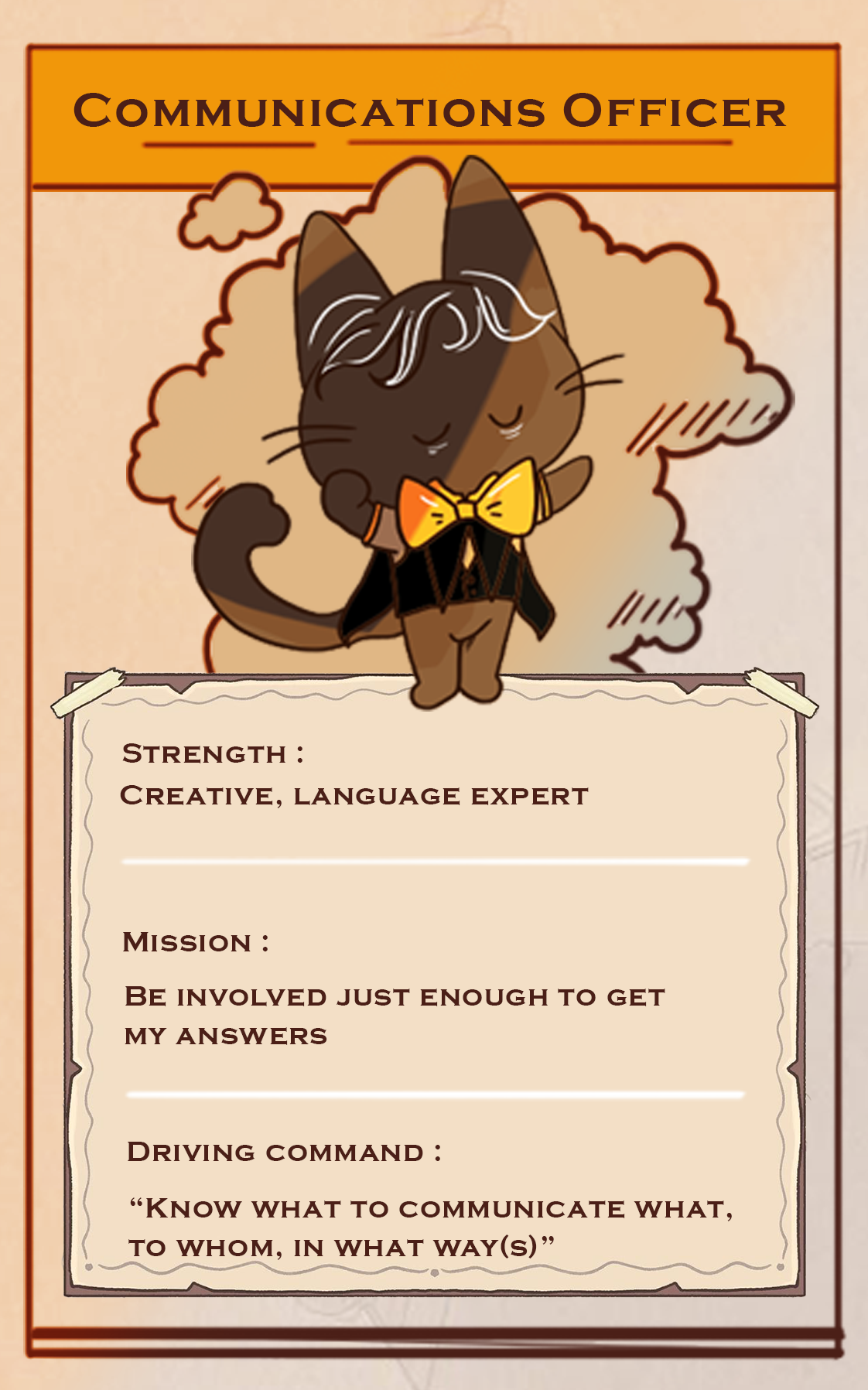
Bringing the game to the Connectors Workshop in Bengaluru, India in October 2025, I was hoping to get more feedback to further improve the game. Before the delivery day, only a few people signed up for my game. But on the delivery day, that number quadrupled! The original version of the game relied on a facilitator (me) to lead, and I couldn’t manage a dozen people effectively by myself, so I improvised and let players adopt certain roles and personalities within a project team. The game was unexpectedly successful! People were so in character and having fun. They also had many “a ha!” moments while exploring the questions and discussing the answers with their mates. And that was how version 3.0 of the game was born!
Why share the game?
Not every project or organisation has the budget for a Monitoring and Evaluation Officer. Oftentimes, the tasks are divided among Project Manager and Project Officer(s) who might not be equipped to carry out an evaluation. The board game is a simple, low-cost tool to give project teams a primer on what steps are involved in planning an evaluation.
Together, these steps form the framework of an evaluation where different methods and approaches can be later selected and fitted into. The questions, instead of definitions or terms, prompt players to look for answers and offer a concrete avenue for them to start taking action.
Acknowledgement
I would like to thank the Public and Community Engagement team at OUCRU Viet Nam for their support and useful feedback on the initial version of the game.
A bazillion thanks to my dear friend – Nguyen Thi Thao My for entertaining my ideas and working tirelessly to bring them into life! We went through multiple design packages before arriving at this final version. And she did all of that in return for only a plate of French fries!
Last but not least, thank you to the organisers of the Connectors Workshop 2025 for giving me the platform to innovate and to the lovely participants who showed up and joined my game!
Download the game