|
|
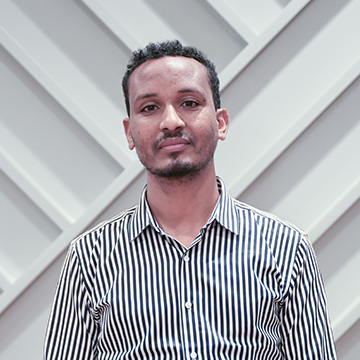
Teklu is a social science researcher at Armauer Hansen Research Institute (AHRI), Ethiopia, specializing in Implementation Science with a focus on stakeholder engagement, contextual adaptation, and strengthening implementation outcomes in public health programs. He has collaborated with international research teams on projects addressing malaria, leishmaniasis, and other neglected tropical diseases, emphasizing the role of social and behavioral sciences in improving health outcomes. Through the use of mixed methods, Teklu investigates the interplay of actors and systemic barriers to inform effective and equitable health policies and practices. A grantee of DELTAS Africa II CE Seed Fund, and a fellow of the Africa Pandemic Sciences Collaborative- individual policy exchange program (iPEP) from the Science for Africa (SFA) Foundation, Teklu aims to bridge research and policy, fostering collaboration among health actors. He holds Bachelor’s and Master’s degrees in Sociology from Addis Ababa University and is pursuing a PhD in the same field. Learning from experience about top-down approaches that often struggle with acceptability and sustainability due to limited understanding of community structures, communications, and varied interests, Teklu is inspired to mapping key health actors in communities and understanding power dynamics that shape care-seeking, referrals, adherence, and trust in health systems.
Current Community Engagement Project
"Path to Community Engagement in Science" is a DELTAS AFRICA II Community Engagement (CE) Seed Fund project supporting the African Leishmaniasis Consortium (ALC) in Ethiopia. This project aims to design tailored strategies for community engagement in health interventions by systematically mapping community-based health actor-networks and analyzing their power dynamics in Ethiopia. The project is being implemented in two socio-culturally distinct communities: Chincha District in Southern Ethiopia and Worebabu District in Northeastern Ethiopia. The community engagement project will enhance the main leishmaniasis study by mapping community-based health actor-networks and analyzing power dynamics, thereby improving trust, participation, and tailored engagement strategies. It will complement epidemiological and socio-cultural research by revealing local decision-making structures, gender roles, and belief systems that shape health behaviors and persistence of transmission. The project builds consortium capacity in social network analysis and engagement, fosters cross-disciplinary collaboration, and strengthens community and policy partnerships, while enabling knowledge and experience sharing from the Ethiopian team and tailoring of CE tools across member institutions, thereby enhancing data quality, research uptake, and positioning consortium institutions for sustainable impact and future opportunities.