Climate change and health at the community level
Climate change has been reported as a global crisis that intensified impacts of natural hazards and variable weather fluctuations, challenging countries in adapting to climate uncertainties while sustaining progress (2,9). In Southeast Asia, climate change trends tend to be on the two extremities of cold and hot seasons, wherein maritime countries like Indonesia, Malaysia, and Philippines experience greater variations in surface temperature and total precipitation (15, 20). These conditions increase risks as unpredictable weather disrupts ecosystems and leads to more disasters, disease outbreaks, and long-term changes that strain the country’s economy and productivity (12, 16).
In the case of the Philippines, mitigating climate change remains a challenge due to its archipelagic nature and tropical location, which heighten exposure to climate variability. This exposure, along with monsoonal weather and complex terrain, leads to strong seasonal changes and increased climate-related risks that are worsened by environmental degradation (1, 4, 8, 15). This repeated cycle makes the Philippines as one of the most disaster prone countries worldwide, experiencing frequent flooding, landslides, and droughts that often results in loss of life and damage to properties over the years (13, 17). These recurring events greatly affect the health and well-being of the population nationwide, forcing communities to rely on limited or unsafe sources, which leads to sanitation problems and risk of illnesses after the disaster (15). Common health issues include leptospirosis after typhoons and floods, cholera from contaminated water, and malnutrition due to food insecurity during extreme weather (7, 10, 14, 15). Moreover, the cases of dengue and malaria are linked with climatic factors such as temperature, humidity, and rainfall, which create ideal breeding conditions for mosquitoes (7, 9, 11, 16). These impacts are most immediately experienced at the community level, where frontline health workers are often the first to respond to climate-related health risks.
Why Barangay Health Workers (BHWs) matter
To address this concern in communities, the Primary Health Care (PHC) strategy was adopted nationwide to provide essential healthcare services [14]. Specifically, Community Health Workers (CHWs), locally referred to as Barangay Health Workers (BHWs) in the Philippines, are volunteer health personnel serving within their assigned barangays (smallest government unit). They play an important role in providing health-related support, including health education, disease surveillance, vaccination services, community organization, and emergency responder (5). They directly engage with residents in delivering these health services, bridging the gap between communities and the formal health system (6). As a critical component in health service delivery, BHWs must maintain the technical skills and knowledge needed to sustain the trust and camaraderie they have built within the community (12). As trusted members of their communities, BHWs bring critical local knowledge on lived climate impacts, making them key partners, not just implementers, in climate and health research and action. With increasing influence of climate change in the healthcare sector, understanding the link between the two is essential for BHWs to effectively fulfill their roles. Strengthening the capacity of BHWs will better equip them to inform communities and eventually improve health responses.
A community-engaged training approach
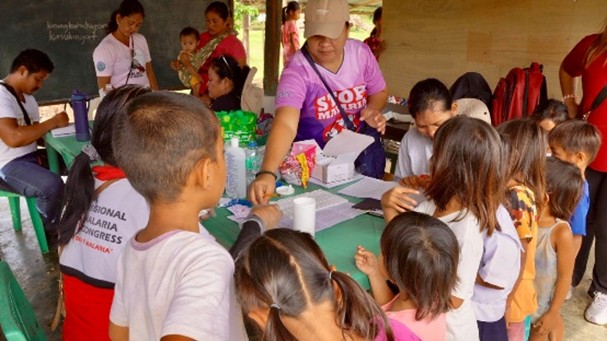
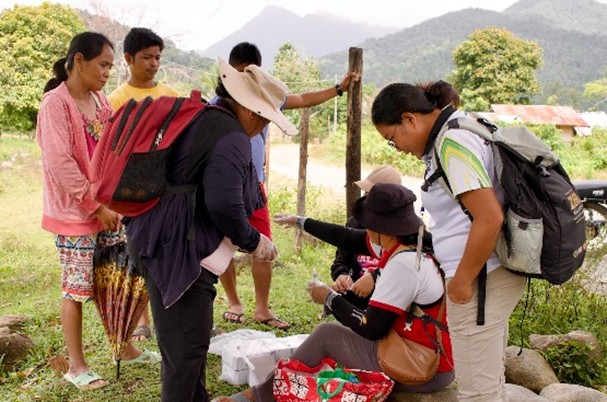
On March 14, 2025, the UP National Institutes of Health - Institute of Child Health and Human Development, funded by the German agency for international cooperation — Deutsche Gesellschaft für Internationale Zusammenarbeit (GIZ) GmbH, conducted a pilot training on climate change and health for 50 Barangay Health Workers (BHWs) from Barangays Punta Baja, Iraan, Candawaga, and Bunog in Rizal, Palawan.
The training module was designed as a supplementary addition to the existing module for BHWs in Palawan, integrating climate change concepts into familiar health topics. The sessions combined short lectures on the concepts of climate change, its causes and effects, its impact on human health, and strategies to adapt and mitigate its negative effects, along with related exercises to enhance participants’ learning, and empower them to communicate these topics effectively.

Session One:
Making sense of climate change together
The first learning session covered the concept of climate change and its causes led by Dr. Kristal An Agrupis.

Session Two:
Connecting climate change to health and livelihoods
The next session was led by Dr. Maria Vinna Crisostomo, where she discussed the health impacts of climate change, building directly on participants’ experiences.

Session Three:
From awareness to action.
The final discussion addressed measures to reduce the negative effects of climate change.
Reflections and Lessons Learned
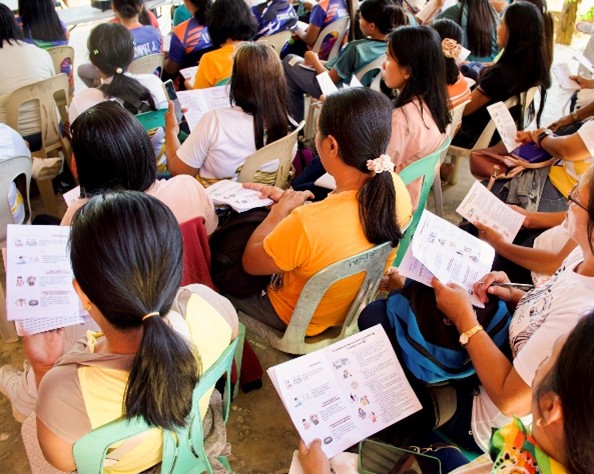
Throughout the training, climate change was gradually reframed—from a global phenomenon to a local health issue with immediate relevance. BHWs connected sudden weather changes to health risks they encounter in their daily work, strengthening their confidence to communicate these issues within their communities.
Key lessons from this pilot include:
- Start with lived experience: Grounding discussions in what participants already observe fosters engagement and relevance.
- Use participatory methods: Dialogue, group work, and reflection help transform technical concepts into actionable knowledge.
- Build on existing systems: Integrating climate content into established BHW training platforms enhances feasibility and sustainability.
Participants also emphasized the importance of translating materials into local languages to improve understanding and uptake.
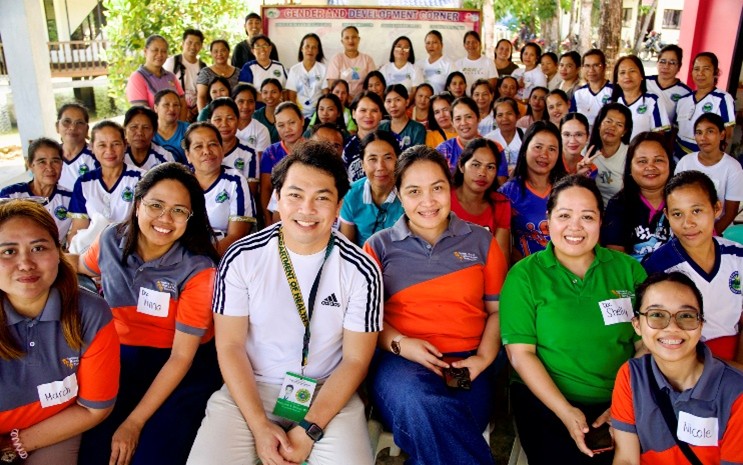
This pilot demonstrates that community health workers are essential partners in climate and health action. Strengthening their capacity through participatory, context-sensitive training can enhance community preparedness and resilience to climate-related health risks.
As climate impacts continue to intensify, community-engaged approaches like this offer a practical pathway for linking climate science to everyday health action—starting at the barangay level and building upward.
References:
- Asian Development Bank. (2009). The Economics of Climate Change in Southeast Asia: A Regional Review. https://www.adb.org/publications/economics-climate-change-southeast-asia-regional-review
- Ayers, J., Huq, S., Wright, H., Faisal, A. M., & Hussain, S. T. (2014). Mainstreaming climate change adaptation into development in Bangladesh. Climate and Development, 6(4), 293–305. https://doi.org/10.1080/17565529.2014.977761
- Abbass, K., Qasim, M.Z., Song, H. et al. A review of the global climate change impacts, adaptation, and sustainable mitigation measures. Environ Sci Pollut Res 29, 42539–42559 (2022). https://doi.org/10.1007/s11356-022-19718-6
- Chang, C-P., Wang, Z., McBride, J., & Liu, C.-H. (2005). Annual Cycle of Southeast Asia—Maritime Continent Rainfall and the Asymmetric Monsoon Transition. Journal of Climate, 18(2), 287–301. https://doi.org/10.1175/jcli-3257.1
- Department of Health. (2022). Barangay Health Workers’ Reference Manual and Facilitator’s Guide 2022. https://tciurbanhealth.org/wp-content/uploads/2024/06/small-BHW-Reference-Manual-2022-Facilitator-Guide.pdf
- Domingo, A., Little, M., Beggs, B., Brubacher, L. J., Lau, L. L., & Dodd, W. (2024). Examining the role of community health workers amid extreme weather events in low- and middle-income countries: A scoping review. Public Health, 236, 133–143. https://doi.org/10.1016/j.puhe.2024.07.023
- Gregorio, K., Guzman, Y., & Alam, Z. (2022). A Systematic Review on the Association Between the Climatic Factors and the Prevalence of Disease in the Philippines with Respect to the Trends in Other Southeast Asian Countries. https://www.dlsu.edu.ph/wp-content/uploads/pdf/conferences/research-congress-proceedings/2022/FNH-03.pdf
- Holden, W. N. (2019). Endogenous exacerbation of an exogenous problem: climate change, environmental degradation, and unsustainable development practices in the Philippines. Asian Geographer, 36(1), 1–27. https://doi.org/10.1080/10225706.2018.1483831
- Iguchi, J. A., Seposo, X. T., & Honda, Y. (2018). Meteorological factors affecting dengue incidence in Davao, Philippines. BMC Public Health, 18(1). https://doi.org/10.1186/s12889-018-5532-4
- Kongsager, R. (2018). Linking Climate Change Adaptation and Mitigation: A Review with Evidence from the Land-Use Sectors. Land, 7(4), 158. https://doi.org/10.3390/land7040158
- Lu, J. L. DP. (2016). Impact of Climate Change on Human Health. Acta Medica Philippina, 50(2). https://doi.org/10.47895/amp.v50i2.862
- Mallari, E., Lasco, G., Sayman, D.J. et al. Connecting communities to primary care: a qualitative study on the roles, motivations and lived experiences of community health workers in the Philippines. BMC Health Serv Res 20, 860 (2020). https://doi.org/10.1186/s12913-020-05699-0
- Porio, E. (2011). Vulnerability, Adaptation, and Resilience to Floods and Climate Change-Related Risks among Marginal, Riverine Communities in Metro Manila. Asian Journal of Social Science, 39(4), 425–445. https://doi.org/10.1163/156853111x597260
- Querri , A. G., Akihiro, O., Kawatsu, L., Bermejo, J., Vianzon , A., Recidoro, Ma. J., & Medina, A. (2020). Assessment of the role of community health volunteers in delivering primary health care in Manila, the Philippines. 国際保健医療, 35(1), 15–25. https://jglobal.jst.go.jp/en/detail?JGLOBAL_ID=202002276620367148
- Sentian, J., Payus, C. M., Herman, F., & Wan, V. (2022). Climate change scenarios over Southeast Asia. APN Science Bulletin, 12(1), 102–122. https://doi.org/10.30852/sb.2022.1927
- Sumi, A., Telan, E. F. O., Chagan-Yasutan, H., Piolo, M. B., Hattori, T., & Kobayashi, N. (2016). Effect of temperature, relative humidity and rainfall on dengue fever and leptospirosis infections in Manila, the Philippines. Epidemiology and Infection, 145(1), 78–86. https://doi.org/10.1017/s095026881600203x
- Veenema, T. G., Thornton, C. P., Lavin, R. P., Bender, A. K., Seal, S., & Corley, A. (2017). Climate Change–Related Water Disasters’ Impact on Population Health. Journal of Nursing Scholarship, 49(6), 625–634. https://doi.org/10.1111/jnu.12328
- Yumul, G.P., Cruz, N.A., Dimalanta, C.B. (2010). The 2007 dry spell in Luzon (Philippines): its cause, impact and corresponding response measures. Climatic Change 100, 633–644. https://doi.org/10.1007/s10584-009-9677-0
- Yumul, G. P., Cruz, N. A., Servando, N. T., & Dimalanta, C. B. (2011). Extreme weather events and related disasters in the Philippines, 2004–08: a sign of what climate change will mean? Disasters, 35(2), 362–382. https://doi.org/10.1111/j.1467-7717.2010.01216.x
- Yusuf, A. A., & Francisco, H. (2009). Climate Change Vulnerability Mapping for Southeast Asia. https://research.fit.edu/media/site-specific/researchfitedu/coast-climate-adaptation-library/asia-amp-indian-ocean/southeast-asia-amp-philippines/Yusuf--Francisco.--2009.---CC-Vulnerability-for-Southeast-Asia.pdf