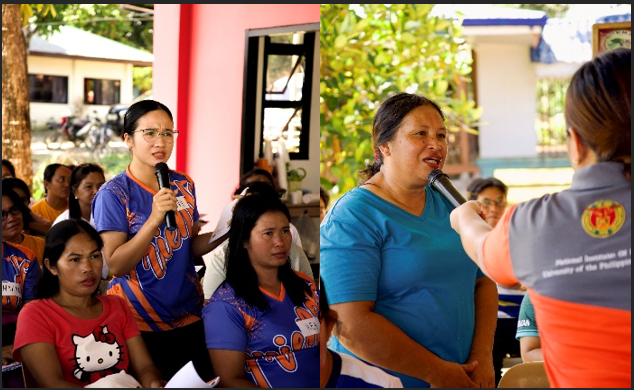
The first learning session covered the concept of climate change and its causes led by Dr. Kristal An Agrupis. Participants were first asked to answer the question, “What is climate change in your own words?”. While some participants mentioned that climate change was relatively new to them or that they had only heard about it recently, others volunteered to share their responses, focusing primarily on the changes they had observed in their communities.
Participants shared their perception of climate change as longer rainy seasons and hotter weather. Open-ended questions were intentionally used to surface community-defined understandings of climate change, ensuring that discussions were grounded in participants’ lived experiences rather than abstract definitions.
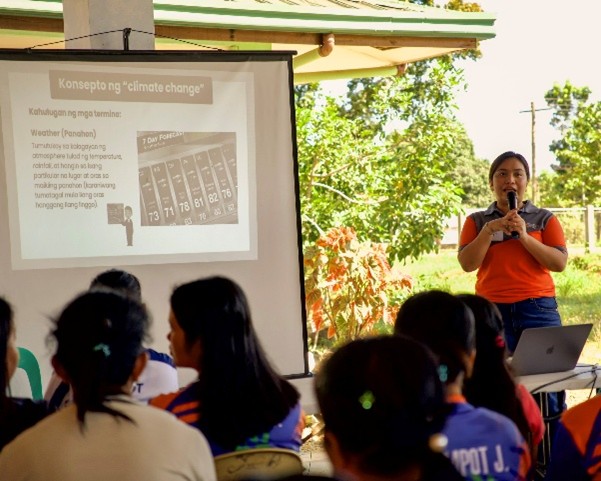
This was followed by the first discussion, which focused on defining key terms such as climate, weather, climate change, and global warming. The difference between climate and weather was also emphasized by using examples from everyday situations, such as daily temperature changes shown in weather forecasts and long-term trends observed over time.
The next discussion included causes of climate change, supported by practical examples. It emphasized the role of human activities such as energy use involving fossil fuels, including coal and gasoline, particularly for transportation; deforestation; manufacturing processes; and lifestyle choices, as well as natural events. The importance of understanding these causes was highlighted as essential for raising awareness and promoting effective community-level action.

Session Two:
Connecting climate change to health and livelihoods
The next session was led by Dr. Maria Vinna Crisostomo, where she discussed the health impacts of climate change, building directly on participants’ experiences.