
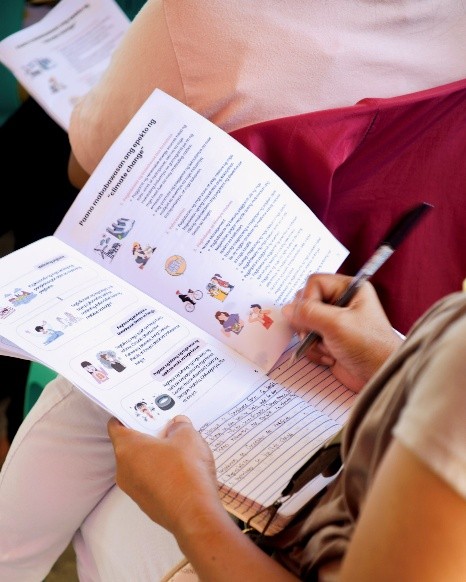
The final discussion addressed measures to reduce the negative effects of climate change. It emphasized practical ways to reduce climate change's impact, such as cutting greenhouse gas emissions through renewable energy sources and energy-saving technologies in industries, transportation, and households; promoting reforestation; adopting sustainable lifestyle choices like waste management; raising community awareness about the consequences of our actions; and strengthening health infrastructure for future climate emergencies. As volunteers functioning at the community level and directly engaging with the residents, they contribute substantially to climate change education.
After the last discussion, an activity was conducted where participants were grouped by their barangays. They collaborated and shared insights on how to help mitigate the negative effects of climate change in their communities. Each group’s representative presented their output, highlighting their ongoing initiatives and proposed plans to reduce the negative impacts of climate change on existing diseases such as dengue, malaria, cholera, cardiovascular conditions, and malnutrition. Participants recognized the importance of identifying the causes of these diseases.
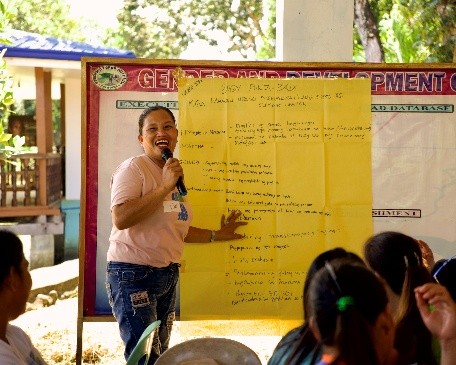
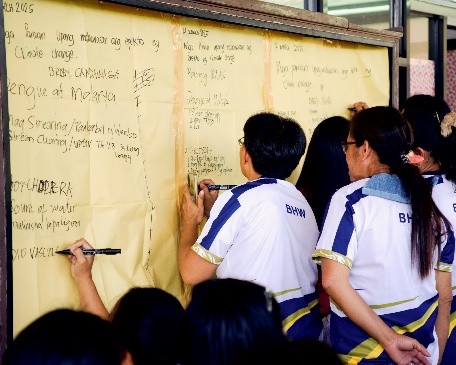
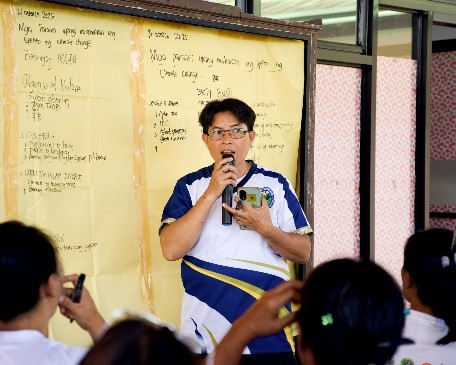
Participants during the group activity & representatives per barangay presenting their output