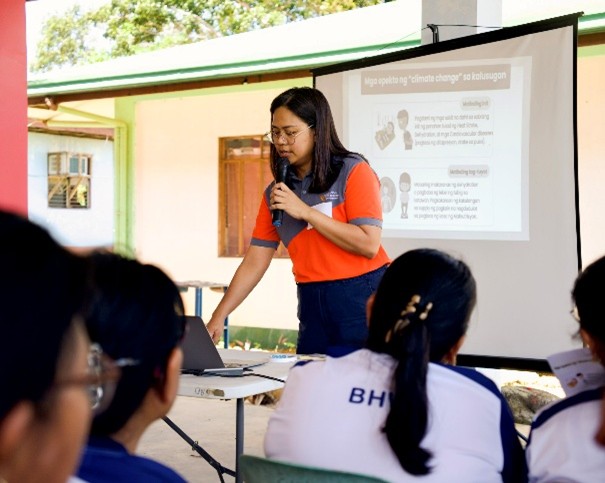
The next session was led by Dr. Maria Vinna Crisostomo, where she discussed the health impacts of climate change, building directly on participants’ experiences. Before the discussion, participants were asked about the weather changes they are currently experiencing. Some participants volunteered to share their responses, focusing on the changes they had observed in their fishing and farming livelihoods, as well as shifts in local weather patterns. One participant shared that they now sometimes experience lean harvest from fishing. Another participant reported difficulty in choosing the appropriate crop to plant due to changing weather conditions.
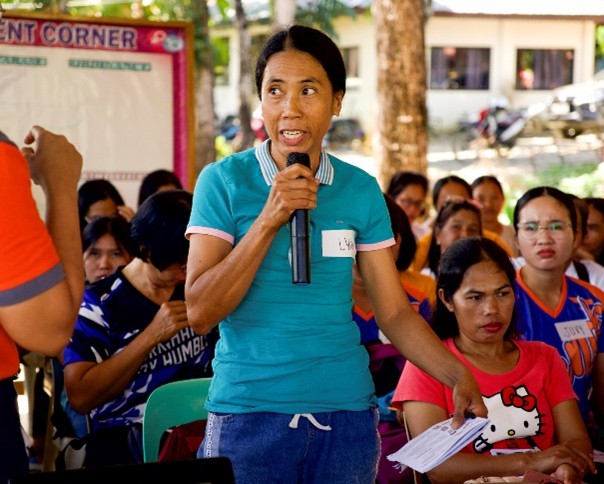
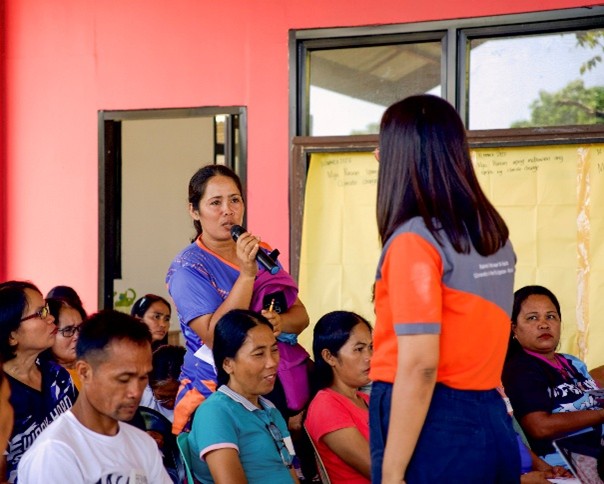
Two of the participants who shared their answers on the weather changes they observed
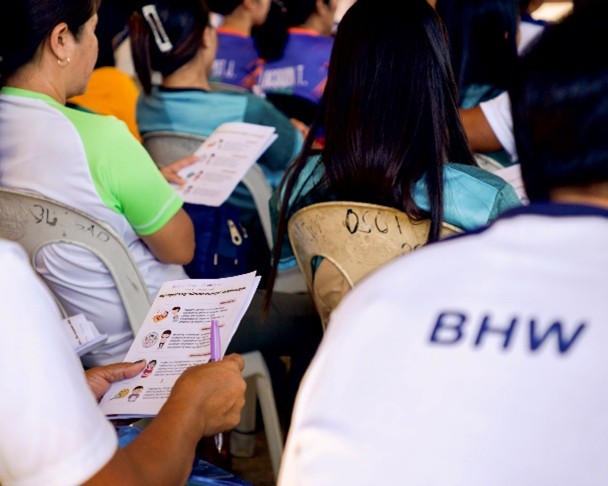
The session discussed the general effects of climate change (direct and indirect) and its significant health implications. The session emphasized the indirect impacts of climate change on human health, including heat-related illnesses such as Heat Stroke, and cardiovascular diseases; respiratory conditions such as Asthma, Chronic Obstructive Pulmonary disease, lung cancer, and Rhinitis; malnutrition and dehydration from drought; water-borne diseases (such as Cholera; and vector-borne diseases (such as Dengue and Malaria). The discussion also emphasized how changing and extreme weather patterns exacerbate existing health problems and introduce new risks, especially among vulnerable populations. The session also stressed the effects of extreme flooding from continued heavy rains, such as the disruption and limitation of health services to communities in need, as well as physical injuries or, even worse, death.
By linking health outcomes to familiar experiences, the session helped BHWs see climate change not as a distant environmental issue, but as a determinant of everyday health risks in their barangays.

Session Three:
From awareness to action.
The final discussion addressed measures to reduce the negative effects of climate change.