
A description of the Ziauddin University Critical Care Research Patient and Public Involvement and Engagement group, which includes a comprehensive set of tools and templates
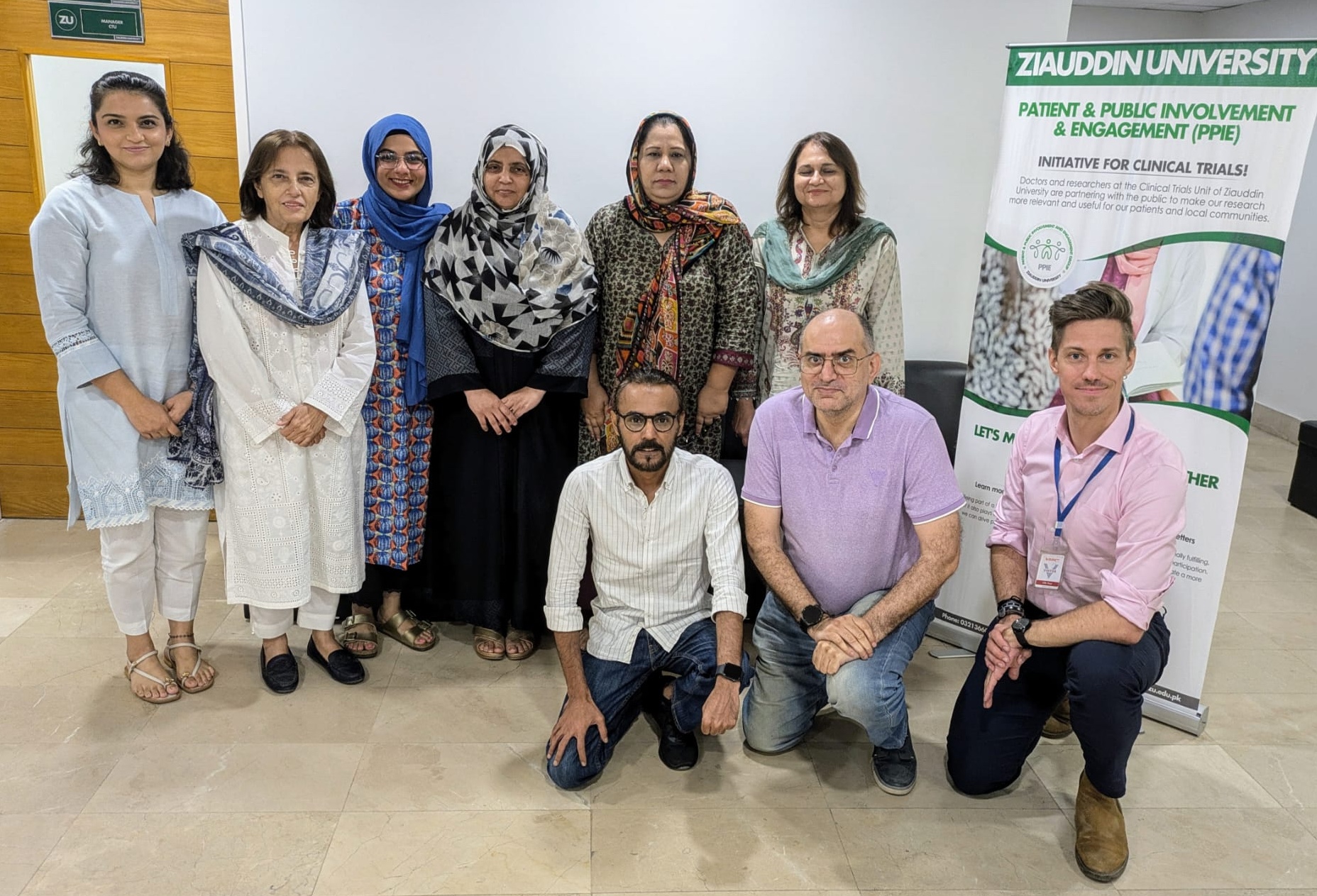 A new trials unit at Ziauddin University in Karachi has established Pakistan’s first Patient and Public Involvement and Engagement (PPIE) group for clinical trials. As there are few resources available about how to effectively implement PPIEs and the care with which this exercise was conducted, the learnings garnered by the Critical Care Research Group at Ziauddin University leading the PPIE group are invaluable to the field of community engagement in medical research.
Active participation of patients and publics in the design, implementation, and dissemination of randomized control trials is increasingly acknowledged to both be an ethical imperative and to improve the quality and efficiency of trials. Despite this, direct patient and public involvement in trial design and conduct is extremely limited. As a result, few resources are available on how to effectively set up, for instance, PPIE groups, across the world but especially in low-resource settings. PPIE groups and other engagement models often face challenges of tokenism, recruitment, and the retention of diverse membership, which compromise the meaningfulness and efficacy of the engagement exercise. Tackling such challenges requires operational information and advice.
The conduct of Pakistan’s first PPIE group demonstrated the feasibility of establishing a PPIE group for clinical trials in low-resource settings and the conducting team found that there was great interest among patients and members of the public to engage in research. The team’s two main learnings were that a lot of energy and sufficient resources need to be invested in very broad engagement to ensure the right kind of recruitment and to ensure that relationship building takes place; and that effective collaborative relationships and addressing of power dynamics requires formally discussing and documenting expectations before the PPIE exercise begins. Ziauddin University’s PPIE group seems to have been successful because a lot of care was taken to address the power imbalances between the team and the PPIE group members – an important criteria in recruitment was the ability of group members to express disagreement with the doctors conducting the exercise.
Tools and resources:
- Research Article describing the PPIE group
- Information and recruitment leaflet
- Terms of reference for PPIE group member (English) (1.7MB)
- Terms of reference for PPIE group member (Urdu) (1.3MB)
- My Involvement Profile (member information collection sheet)
- First training workshop schedule
- Process of organising PPIE meetings at Ziauddin University (SOP) (2.5MB)
- PPIE honoraria and expenses policy (4.1MB)
- Form - Request for input in health research (to be completed by investigators) (4.7MB)
- Step-by-step guide to public engagement in clinical trials in Pakistan (1.1MB)
- Newsletter - November 2023
- Newsletter - April 2024
What is a Clinical Trial (Urdu)
What is a Clinical Trial (Pashto)
What is a Clinical Trial (Sindhi)
An interactive toolkit to support the establishment and running of a Patient and Public Involvement and Engagement group
Authors: Timo Tolppa, Arishay Hussaini, Nikhat Ahmed and Madiha Hashmi.

This interactive toolkit is intended as a resource to support the establishment of Patient & Public Involvement and Engagement (PPIE) initiatives within health research teams and projects. While focused on a national PPIE network in Pakistan led by the Critical Care Research Group (CCRG) of Ziauddin University, the toolkit provides useful resources and guidance for anyone seeking to involve patients, their families and members of the public in health research.
The toolkit is divided into an introduction, 10 chapters and a conclusion. The introduction defines PPIE and provides background to the national PPIE network. The first chapter gives an overview of the process of establishing a PPIE initiative with subsequent chapters offering detailed guidance for every step in the process. Links to editable examples and worksheets are included as appendices in relevant chapters. A PDF version of the entire toolkit and all appendices are freely available for download here.
The advice provided in the toolkit is based on the experiences of our group in establishing the first-ever PPIE group in Pakistan to support trials, supporting the formation of PPIE groups at other institutions across Pakistan and South Asia, and learning from global engagement initiatives. Any suggestions for improvements are welcome. Feel free to amend and adapt all aspects of this toolkit for your own purposes in any way you wish, however, make sure to appropriately credit the creators as per the license below. Do not hesitate to get in touch with us at ppie@zu.edu.pk.