
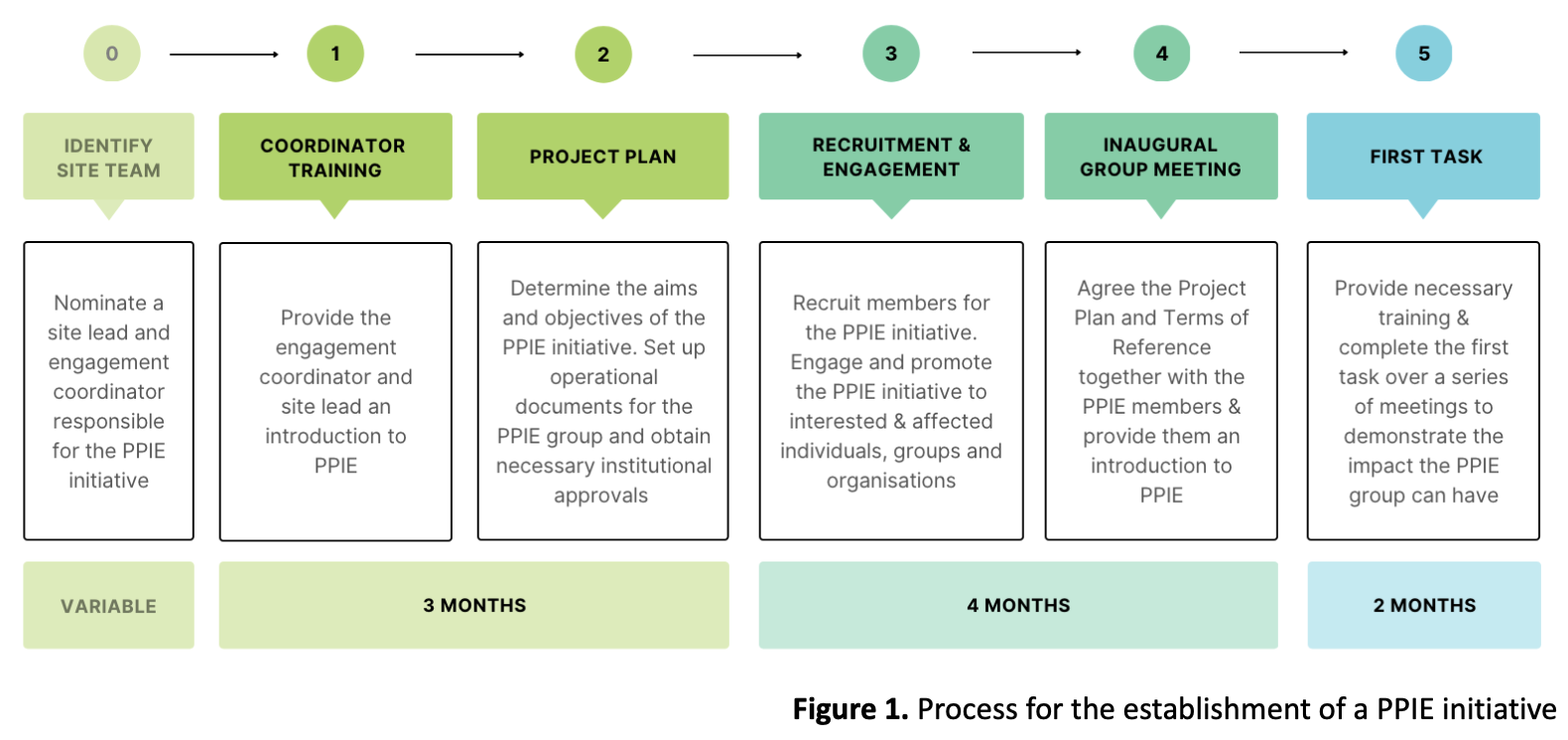
Establishment of a successful PPIE initiative takes careful planning and execution. Figure 1 provides an overview of a process which can be followed to establish a PPIE group and the list below highlights the importance of each step in the overall success of an initiative. The remainder of this toolkit gives detailed guidance for each step.
Steps to Establish a PPIE Initiative
0. Identify Site Team
Having a person dedicated to PPIE is crucial to progress and coordinate the initiative, while a senior lead is needed to navigate institutional processes and gain buy-in from leadership.
1. Coordinator Training
The dedicated individuals must be equipped with the knowledge and skills to effectively lead a PPIE initiative. This includes understanding international standards on public engagement, the ethics of working with vulnerable individuals, and developing skills in communication and group facilitation.
2. Project Plan
Clear aims and objectives serve as a guiding framework for the initiative, enabling the team to plan activities, communicate with potential members and partners, and evaluate progress as well as impact.
3. Recruitment & Engagement
Generating awareness and gaining support for the initiative from a broad range of partners not only helps with recruitment but also encourages collaboration and promotes long-term impact. Effective onboarding of PPIE members sets the tone for a collaborative working relationship.
4. Inaugural Group Meeting
Co-creation of a Terms of Reference with PPIE members promotes ownership and engagement with the initiative and establishes clear ground rules for moving forward.
5. First Task
Completing an early “low-hanging fruit” task provides evidence of the initiative’s potential impact and is important for motivation and retention of both PPIE coordinators and members.