Cristina Hamamura Moriyama1; Anna Cecilia Queiroz2; Isabelly Cristina Rodrigues Regalado2; Kate Sturgeon3; Adriana Gomes Magalhães2; Egmar Longo1; Nascer e Crescer Project PPI Group*
1Federal University of Paraíba (UFPB), Brazil
2Federal University of Rio Grande do Norte (UFRN), Brazil
3University College London (UCL), United Kingdom
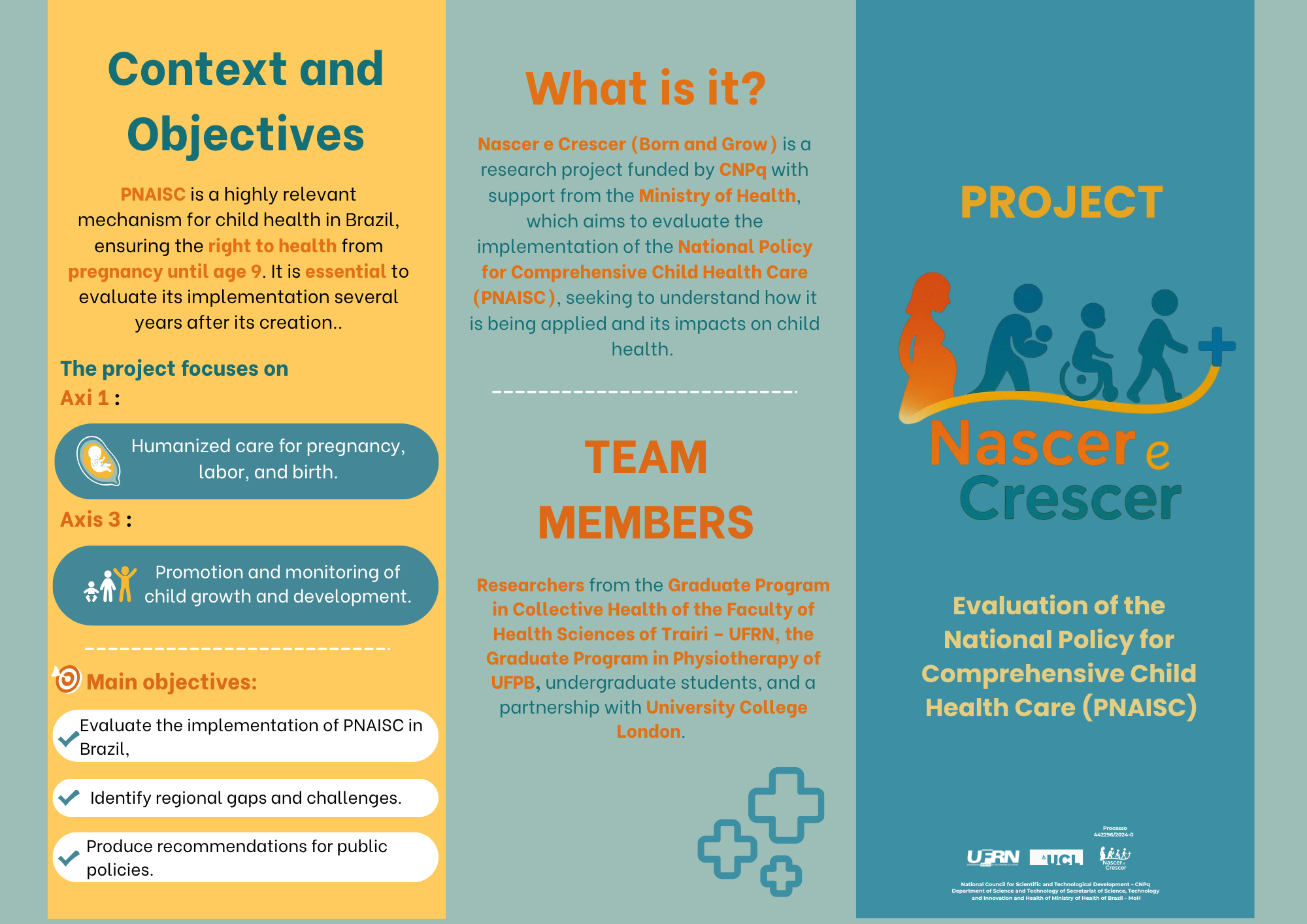
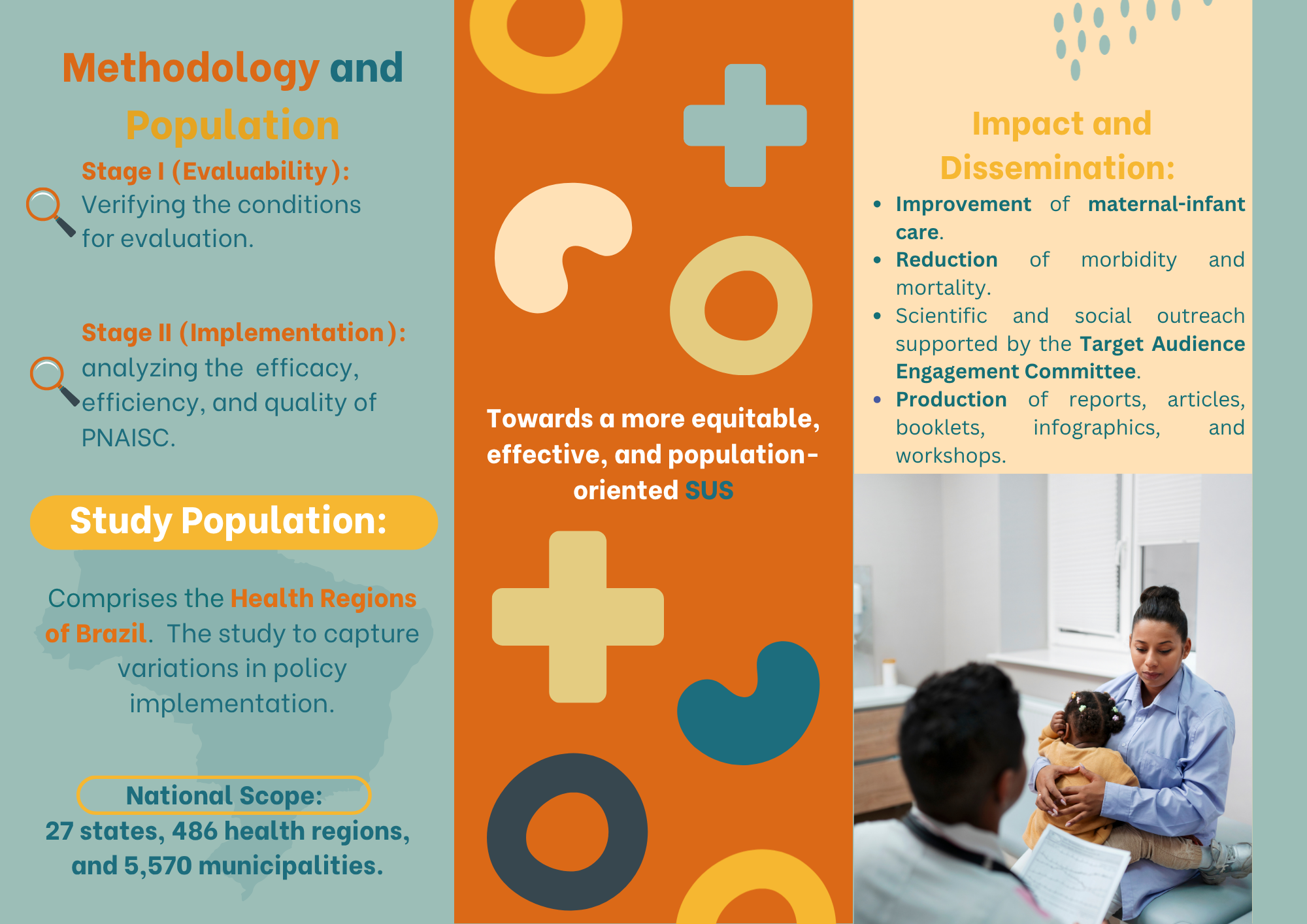
The "Nascer e Crescer" (“Born and Grow”) Project: Evaluation of the National Policy for Comprehensive Child Health Care is a study funded by the National Council for Scientific and Technological Development (CNPq) and supported by the Ministry of Health of Brazil. A team of researchers from the Federal University of Rio Grande do Norte (UFRN), in collaboration with the Federal University of Paraíba (UFPB) and University College London (UCL), in partnership with members of the public, is configuring a co-design process. This study aims to evaluate the implementation of the National Policy for Comprehensive Child Health Care (PNAISC), established by Ordinance No. 1,130 of August 5, 2015, which covers childcare from gestation to 9 years of age, with an emphasis on early childhood (1). The methodology of this project consists of the following stages: 1) formation of the patient and public involvement (PPI) group; 2) assessment of evaluability; and 3) ex-post implementation assessment, with PPI in the research being cross-sectional throughout the project.
In countries where patient and public involvement (PPI) is already consolidated, this approach has become increasingly important in health policy decision-making to respond to the demands of the health system, especially those of the population. PPI has supported both policymakers and managers across service planning, resource allocation, and priority setting (2). In Brazil, the evaluation of public policy implementation has been consolidated to strengthen the Brazilian health system and ensure that the population has access to qualified services that meet their needs (3). In the specific case of the PNAISC, 7 strategic axes were established to guide actions and services for pregnant women and children from birth to 9 years of age. The evaluation of the implementation of the PNAISC in the Brazilian territory by the “Nascer e Crescer” Project team focuses on axes 1 and 3, which address humanized care during pregnancy, childbirth, and the newborn period; and the promotion and monitoring of child growth and development, respectively (1). In this context, the PPI plays a fundamental and innovative role in the “Nascer e Crescer” Project, by giving voice and protagonism to those for whom the services and programs implemented through this public policy are intended. (Figure 1)
Formation of the PPI Group
The formation of a PPI group to support a study aimed at evaluating the implementation of a public health policy in Brazil is unprecedented. The researcher responsible for forming the group initially followed the guiding principles published on the MESH page, hosted on The Global Health Network platform, to understand how this action was carried out in other countries, particularly in low- and middle-income countries like the Brazilian context(4)
Initially, the project planned to recruit 15 members from the target audience to form the PPI group, which would consist of users of the Brazilian public health system (pregnant women and mothers/fathers of children aged 0 to 9 years), as well as community advisors, health professionals, and managers working in primary health care.
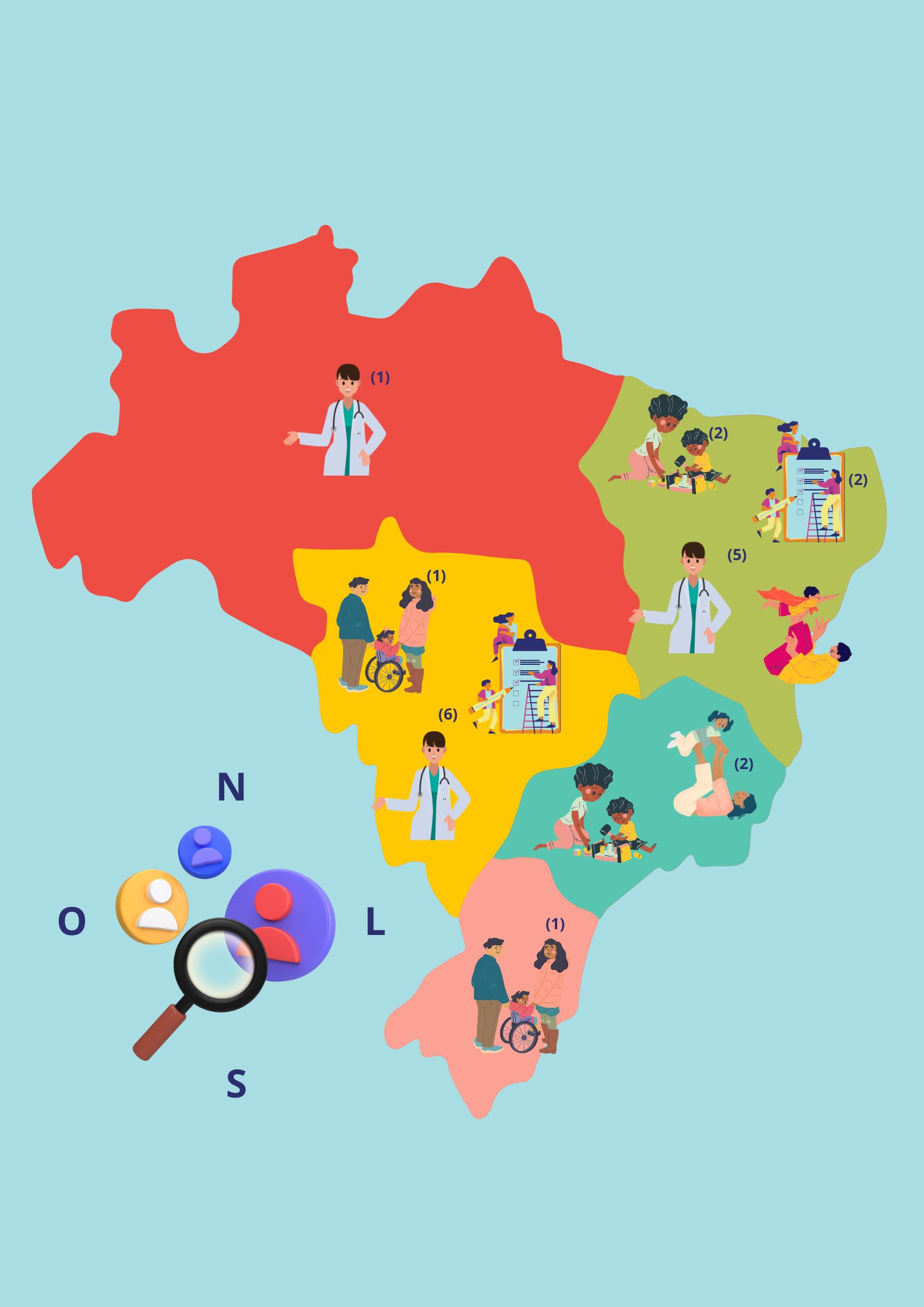
Considering the territorial dimensions of Brazil and to ensure the representativeness of the country's different regions, the researchers used non-probabilistic sampling to select target audience members, including potential interested parties. The PPI group initially comprised 20 members, including mothers/fathers, healthcare professionals, and managers, representing the 5 Brazilian regions (North, Northeast, Central-West, Southeast, and South). (Figure 2)
Figure 2. *Ilustration of the distribution of the public members by regions of Brazil.
Contacts were initiated via WhatsApp and email, with brief explanations of the project. If there were interest and availability, meetings were scheduled via Google Meet for a more detailed conversation regarding patient and public involvement in research. Following initial acceptance, a preliminary online meeting was agreed to introduce the members to each other and to the researcher responsible for forming the group, and to clarify any doubts. An icebreaker activity was organized at this meeting to make the encounter more welcoming and to help everyone feel comfortable expressing their opinions.
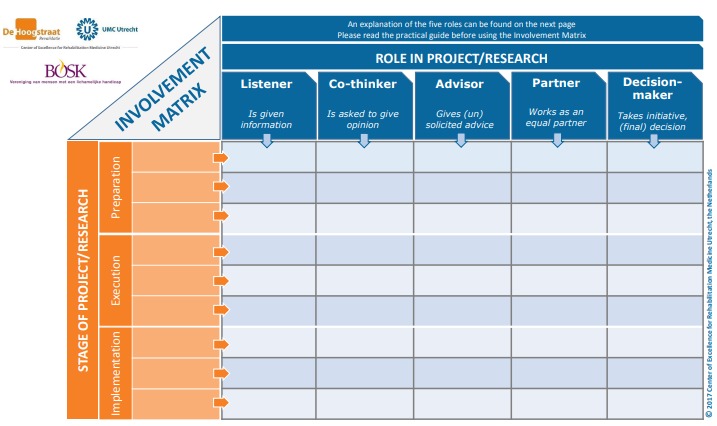
The formal presentation of the project was delivered at the first meeting between members of the PPI group and researchers, involving the Patient and Public Involvement and Knowledge Translation committees, with the roles they assumed in the meeting defined after selection using the Involvement Matrix (IM) (5). The Involvement Matrix is a tool developed to facilitate PPI in research, starting from age 12, and was created in a collaborative project between Dutch researchers and clinicians from the Center of Excellence for Rehabilitation Medicine in Utrecht and BOSK Utrecht, and with patients and family partners from these institutions. The researchers presented this tool to the PPI group to establish a closer communication channel, so meetings and conversations would be more fluid, and public members would feel comfortable in discussions. Members could choose between five roles: 1. the listener, who receives information about the research actions; 2. the co-thinker, who is invited to give their opinion; 3. the advisor, who gives opinions, whether solicited or not; 4. the partner, who works on equal terms with the researcher; and 5. the decision-maker, who has independence throughout the process. The involvement roles are arranged horizontally, and the project phases are arranged vertically, forming several cells. (Figure 3)
Figure 3. Involvement Matrix translated into Brazilian Portuguese.
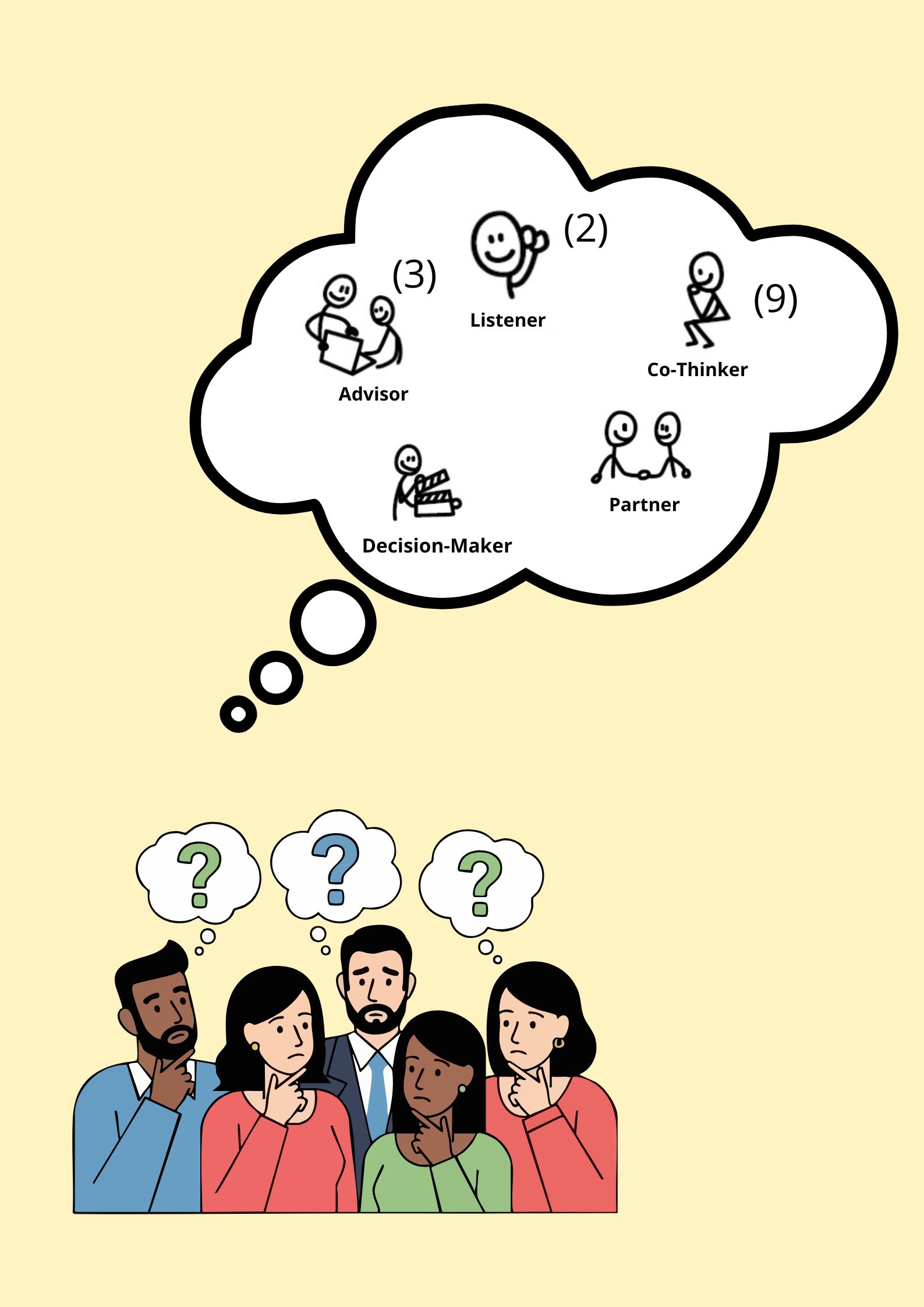
Initially, the committee members opted for the roles of listener (2), co-thinker (9), and advisor (3), and they could change their choice as the research progressed. (Figure 4)
Figure 4. Roles that audience members can choose.
How were the meetings conducted?
Activities with the PPI group began in August with bi-weekly meetings until December 2025, totaling 9 meetings conducted by two researchers who were respectively responsible for forming the group and translating the knowledge. Undergraduate and graduate (master's level) students also participated to ensure the reliability of the meeting transcripts, as these were not recorded to allow members to feel comfortable expressing their opinions and ideas. The group members agreed to continue monthly meetings, remaining active to strengthen public policies focused on child health in this unprecedented initiative of public involvement in research.
What were the contributions of the public members?
The involvement of public members was planned for the different stages of the research cycle. Activities included improving the questionnaires for service users and specialists, identifying actions that still need attention to expand the reach of care for children and their families, and supporting health professionals and managers to improve the services provided. Furthermore, they assisted in the analysis and dissemination of results by developing materials in an accessible language. The PPI group contributed to identifying the actions foreseen in the public policy that require attention to fulfill their objectives, and to developing educational materials in an accessible language about the "Nascer e Crescer" project and programs for children's health.
Lessons Learned
The formation of the Public Involvement Group (PIP) in the context of evaluating a public health policy in Brazil offers relevant lessons for low- and middle-income countries (LMICs). The use of international frameworks, such as the Involvement Matrix and the UK Standards for Public Involvement, proved viable, provided they were adapted to the local sociocultural context. By clearly defining the roles and expectations of public members, as well as by researchers' understanding of PIP, we can reduce power imbalances and strengthen trust between them. Furthermore, ensuring regional representation in a large country required active recruitment strategies, indicating that inclusion does not occur spontaneously and needs to be intentionally planned. The challenge of periodically gathering representatives from different parts of the country was overcome by choosing a remote format, which enabled the research to align with the real needs of their respective regions. In this scenario, these factors contributed not only to the methodological quality of the research but also to its social legitimacy, which are fundamental premises for PIP in research.
“Nascer e Crescer” Project PPI Group:
Ana Beatriz de Miranda Vasconcelos e Almeida; Cilas Viana de Freitas; Eliane Barbosa Jerônimo; Greice Rosa Ponce Mangini; Jean Bendito Felix; Hercilla Nara Confessor Ferreira; Layz Cristina Araújo Sena; Maria Elineuza de Queiroz; Maria Madalena Paulo Torres; Nayara Cristine Marchioro Pereira Siqueira; Nadja Andréa Magalhães Leiros; Marcleide de Jesus Santos; Pedro Davi Carlos de Moura; Sabrina Belo Duarte Rego; Suzana Albuquerque de Moraes; Vera Lúcia Honório dos Anjos.
References:
1. Brasil. Ministério da Saúde. Secretaria de Atenção à Saúde. Política Nacional de Atenção Integral à Saúde da Criança: Orientações para Implementação. Brasília; 2018.
2. Baumann LA, Reinhold AK, Brütt AL. Public and patient involvement in health policy decision-making on the health system level – A scoping review. Vol. 126, Health Policy. Elsevier Ireland Ltd; 2022. p. 1023–38.
3. Esmael H, Mordaunt C, Crowe S. UK Standards for Public Involvement Implementation Stories, 2020. Available from: https://sites.google.com/nihr.ac.uk/pi-standards/resources-and-support
4. Brasil.Ministério da Saúde. Departamento de Ciência e Tecnologia. Avaliação de Impacto das Políticas de Saúde: Um Guia para o SUS [Internet]. Ministério da Saúde. Secretaria de Ciência TI e C da SaúdeD de C e Tecnologia, editor. Brasília; 2023. Available from: http://bvsms.saude.gov.br/bvs/publicacoes/avaliacao_impacto_politicas_saude_guia_sus.pdf
5. Tolppa T, Cheah PY, Mumba N, Davies A. Setting up a research advisory/involvement group. In: MESH [Internet]. The Global Health Network; 2025. Available from: https://mesh.tghn.org/themes/patient-and-public-involvement-and-engagement/mesh-guide-setting-research-advisoryinvolvement-group/
6. Smits DW, Van Meeteren K, Klem M, Alsem M, Ketelaar M. Designing a tool to support patient and public involvement in research projects: The Involvement Matrix. Res Involv Engagem. 2020;6(1).
Acknowledgement
Project supported by the Department of Science and Technology (DECIT/SCTIE/MS), with operational support from the National Council for Scientific and Technological Development (CNPq).